
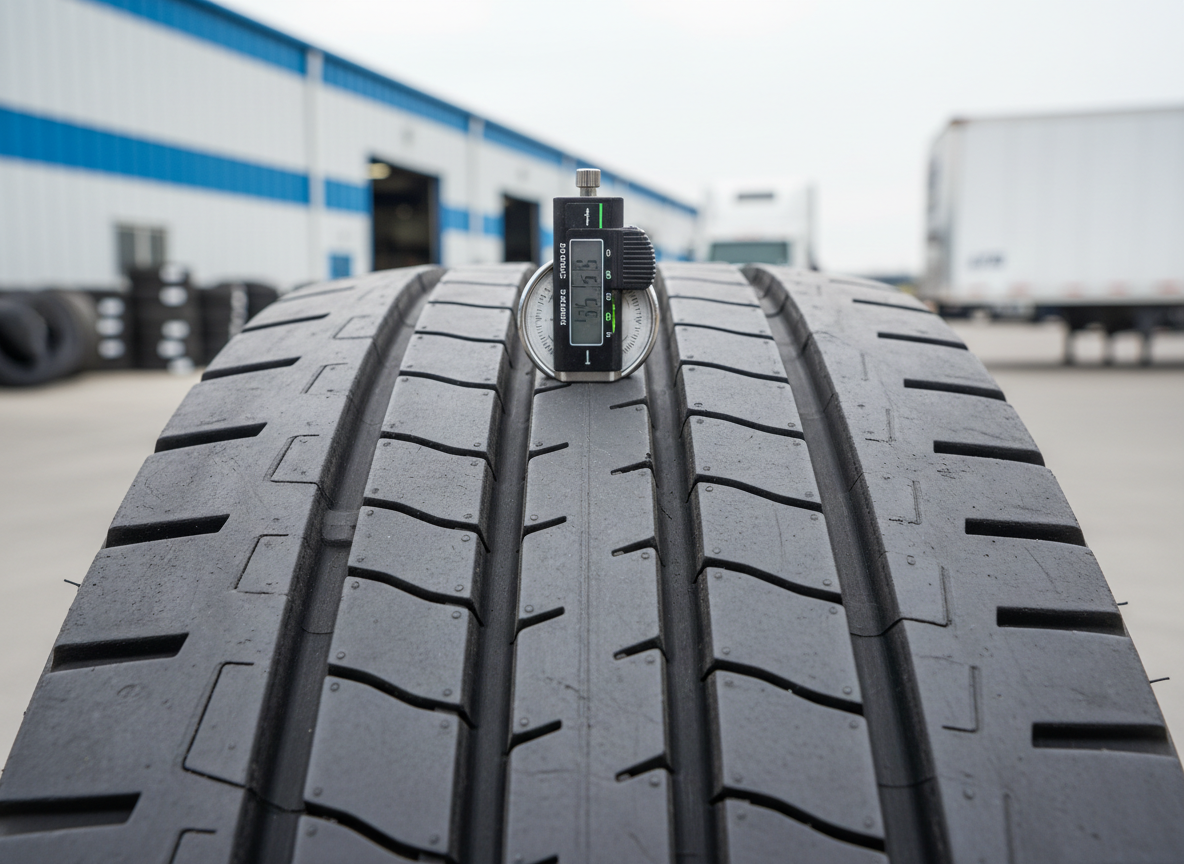
Fleet tire costs don’t usually spike because of one big failure—they creep up through early replacements, inconsistent casing decisions, and “we’ll deal with it later” tread management. For 53‑ft trailer fleets, regrooving is one of the simplest tools to control that creep—when it’s used correctly and only on eligible tires.
Regrooving is a controlled, depth‑limited process that restores usable tread depth by cutting into the tire’s designed regroove base rubber. It is not retreading, and it’s not “cutting tread” on whatever tire happens to be in the yard. Done properly, regrooving can extend the service life of an eligible trailer tire and help fleets defer replacement—without wheel removal and without disrupting yard operations.
But the key word is eligible. Regrooving is only appropriate for certain tires, certain positions, and certain tread patterns. That’s why the best fleets treat regrooving like a standard operating procedure: clear rules, conservative limits, and consistent documentation.
In this fundamentals guide, you’ll learn:
- What regrooving is (and what it isn’t)
- Why it’s best suited to 53‑ft trailer tires with straight‑rib patterns
- The 5 eligibility gates every fleet should apply before approving service
- How to think about timing (the “best window” to regroove)
- What to expect on a batch service day in your yard
If you want regrooving to be a predictable maintenance step—not a debate every time a trailer comes in—start with the fundamentals below.
If you’re new to the concept, you may also want to read our introductory guide on what tire regrooving is and how it works.
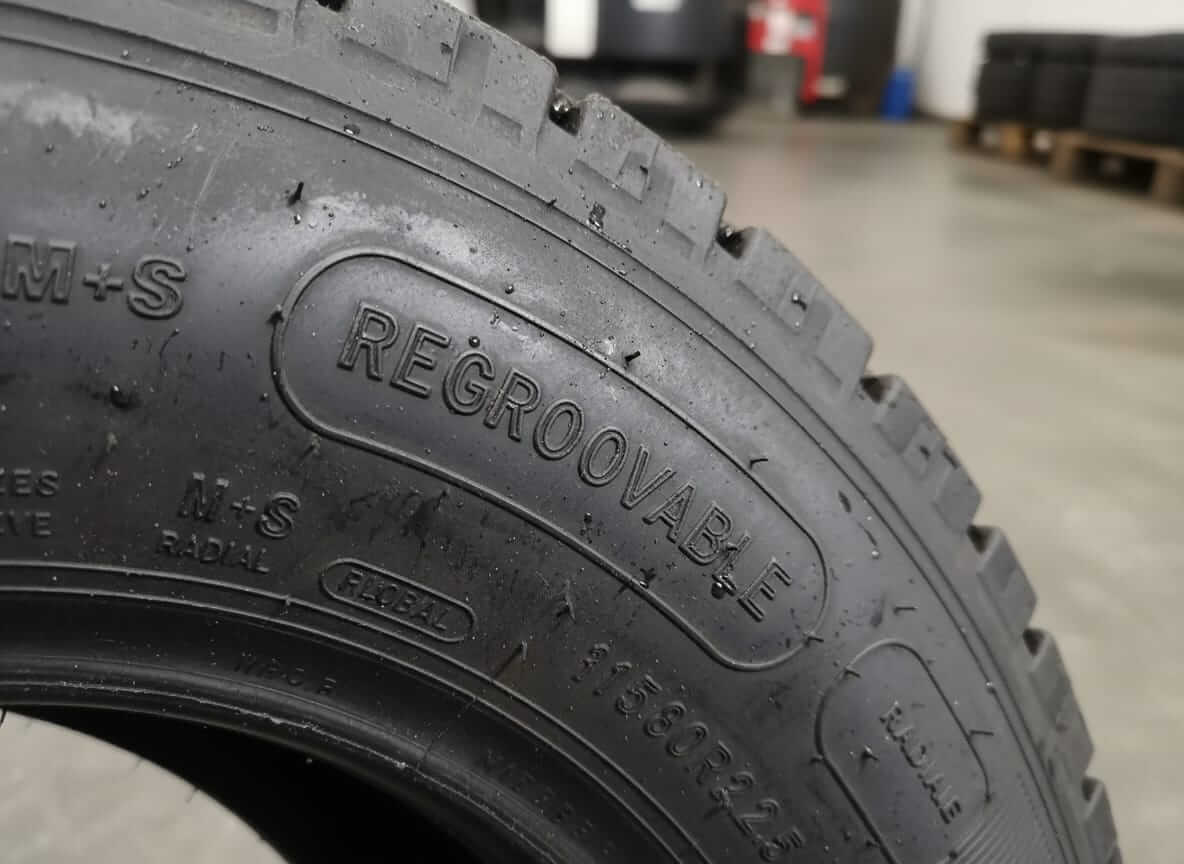
The REGROOVABLE marking on the sidewall is the first eligibility gate — without it, a tire cannot be regrooved
What regrooving is (and what it isn’t)
Regrooving is a depth‑controlled cut into the tread rubber of a tire that is specifically designed and marked as regroovable. The goal is to recover usable tread depth while maintaining a safe rubber buffer above the steel belts.
Regrooving is not:
- Retreading (adding a new tread package to a casing)
- A “last‑chance” fix for damaged casings
- A service for steer or drive positions
- A service for mixed/block patterns when your process is built for straight ribs
The 5 eligibility gates (simple fleet checklist)
Use these gates to keep the process conservative and repeatable:
| Gate | Requirement | Why it matters |
|---|---|---|
| 1 | Trailer axle only | Regrooving is for trailer positions—never steer or drive. |
| 2 | Manufacturer marked “REGROOVABLE” | If it’s not clearly marked, treat it as non‑eligible. |
| 3 | Straight‑rib tread pattern only | Straight ribs track cleanly and produce consistent grooves in an on‑wheel process. |
| 4 | Never previously regrooved or retreaded | No double‑service. A retreaded tire should not be regrooved afterward. |
| 5 | Passes pre‑inspection | No visible casing, sidewall, or belt damage. No unknown history. |
If a tire fails any of these gates, it is skipped and documented. You only pay for tires that are actually serviced.
For a detailed walkthrough of each gate with photos and fleet tips, read our checklist on how to tell if a trailer tire is regroovable.
Timing: the “best window”
Regrooving works best when the tire still has enough tread to justify the service but is far enough along that you’re actually recovering life. Many fleets target a mid‑life window (not brand new, not end‑of‑life). The point is consistency: pick a window, document it, and apply it across the yard.
For a deeper look at tread depth thresholds and when to regroove vs. retread vs. replace, read our tread depth guide for fleet managers.
What fleets should expect on a professional regrooving visit
A compliance‑first regrooving process should feel structured, not improvised. At a minimum, fleets should expect:
- Pre‑inspection before any cutting starts
- Depth‑limited regrooving with conservative controls
- Before/after measurements recorded consistently
- A simple paper depth report for your maintenance file
- Clear “yes/no” decisions when a tire fails eligibility
For a detailed step-by-step of the on-site workflow, visit the How It Works page. For batch day logistics (10–30 trailers), read our guide on how to plan a batch service day for trailer tire regrooving.
Why fundamentals matter (more than the tool)
Most safety concerns around regrooving come from one of two things:
- Regrooving the wrong tire (wrong position, wrong pattern, wrong casing)
- Regrooving without strict depth control and inspection discipline
When fleets standardize eligibility gates and documentation, regrooving becomes a predictable step in the tire lifecycle—helping you control cost per km while protecting casing value.
For the compliance and safety rationale, read our article on DOT & CSA compliance for trailer tire regrooving. For the financial case, see our guide on fleet tire cost optimization and ROI. To check eligibility for your fleet, use the pre-qualification form, and for pricing, see the $80/tire flat rate pricing page.
Ready to see the savings? Book a 2-trailer pilot this week.
Call 438-345-2854 | Email [email protected] | Visit www.apexoperationshub.ca