
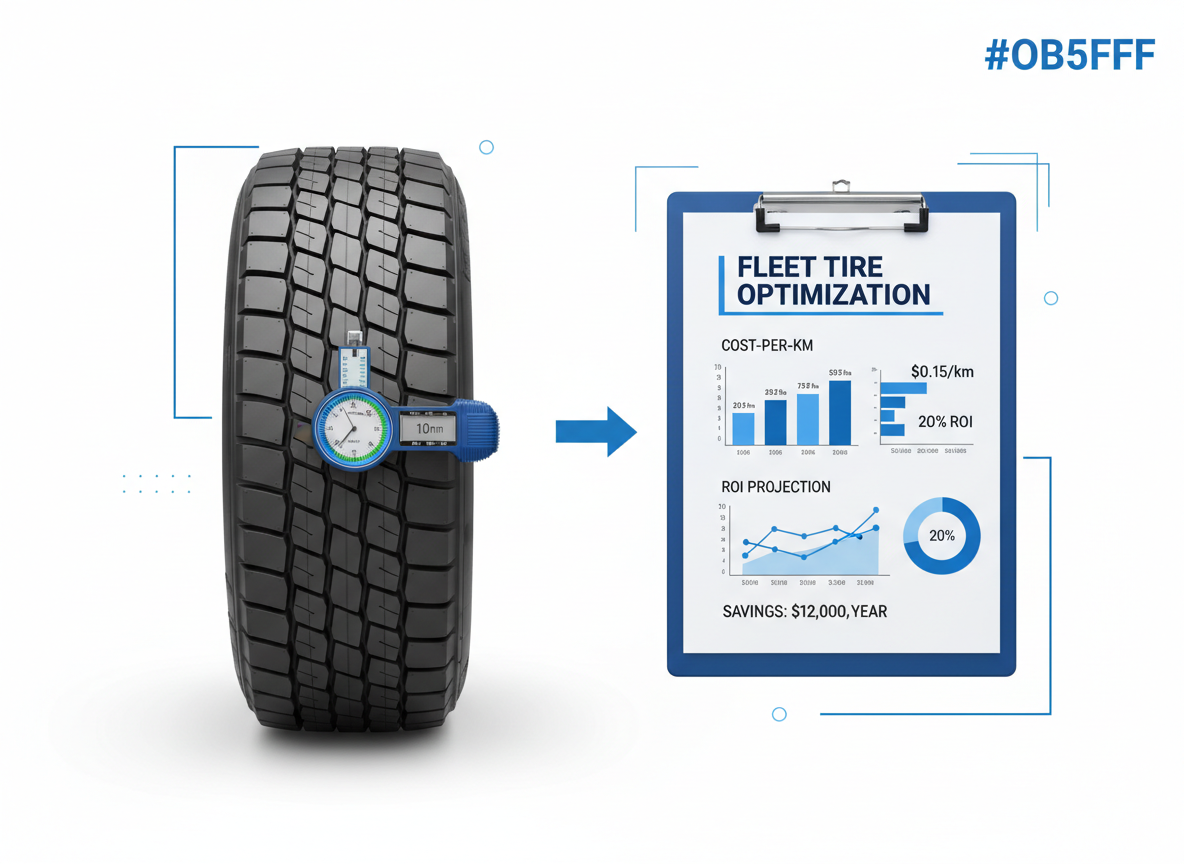
Fleet tire spend feels "fixed" until you measure it the way finance measures everything else: cost per km and cost per trailer per month. Most fleets track tire purchases, but fewer track the avoidable replacement cycles that happen when tires are pulled early, grooves are worn out before the casing is done, or tire decisions are made without a repeatable lifecycle plan.
That's where regrooving (tread recovery) becomes a serious ROI tool — when it's done under strict rules. Regrooving is not retreading and it's not a shortcut. It's a controlled process used on manufacturer-marked REGROOVABLE tires to reopen the original groove channels so the tire can continue to evacuate water and maintain usable traction as it wears. For fleets running 53‑ft trailers, regrooving can be a practical way to extend tread life, reduce tire purchases, and protect casing value — as long as the tire is eligible and the process is documented.
At Apex Tread Recovery, the service is designed around compliance and repeatability:
- Trailer axles only (never steer or drive)
- Straight-rib patterns only
- On-wheel, in-yard service (no wheel removal)
- Mechanical depth limiter: max 3 mm cut depth (non-negotiable)
This post is Pillar 2: Fleet Cost Optimization & ROI. The goal is to give you a framework you can actually use: how to decide if regrooving fits your operation, how to run a pilot that produces defensible numbers, and how to connect regrooving to a broader lifecycle plan (regroove → retread → replace) without hype or vague promises.
If you manage a fleet, you don't need "best-case" claims. You need: eligibility gates that prevent bad tires from entering the process, a measurement method that proves the result, and a lifecycle sequence that lowers cost per km while staying DOT/CSA-compliant.
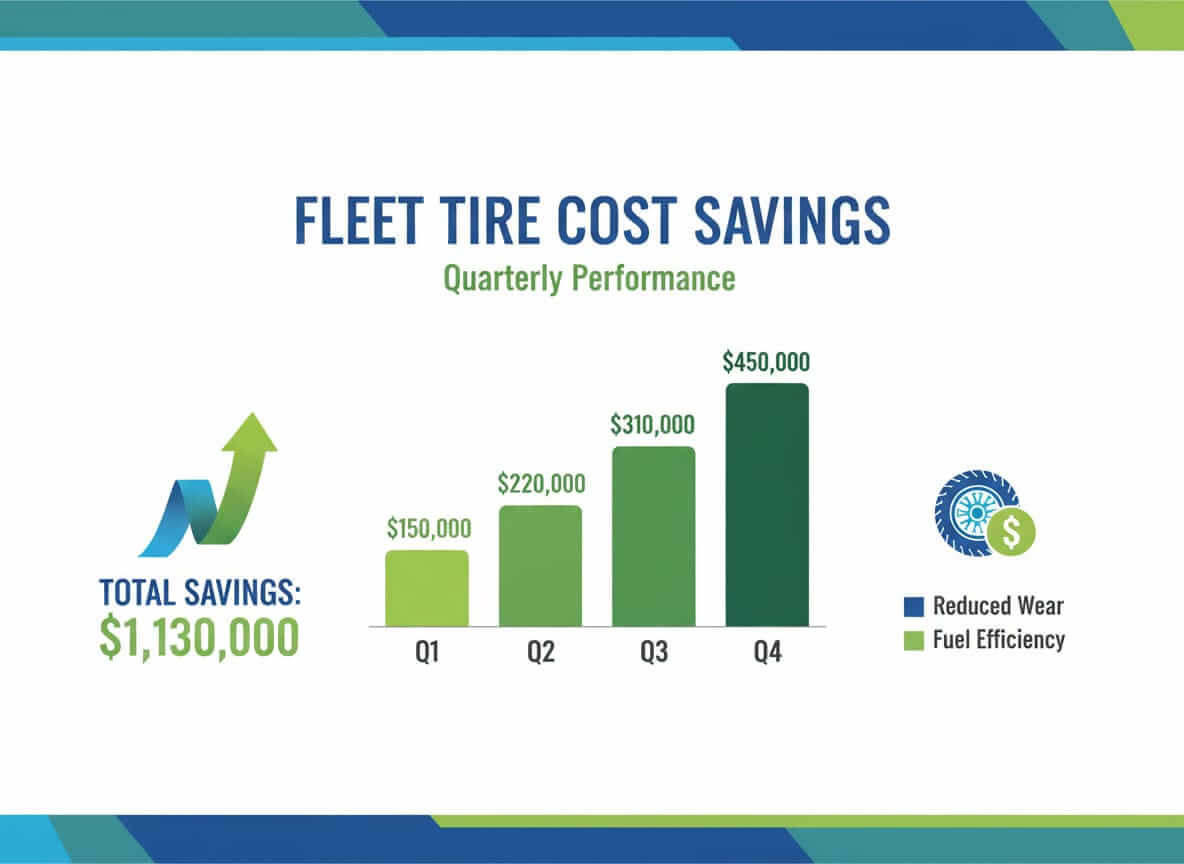
Fleet tire cost savings — quarterly performance data
A clean ROI analysis starts with one question
How much does one additional usable tread cycle reduce tire purchases and downtime? Regrooving improves ROI when it reliably extends service life on tires that were designed to be regrooved — without increasing risk. That means your first job is not "calculate savings." Your first job is control variables.
1) Eligibility is the ROI gate (don't skip it)
Regrooving is only for tires that meet strict criteria. If you loosen the rules, the ROI becomes noisy and you'll blame the method for problems caused by bad inputs.
Minimum eligibility rules for your operation:
- Tire is manufacturer-marked REGROOVABLE
- Straight-rib pattern (no curves/zigzags)
- Trailer axles only
- No visible casing/sidewall/belt damage
- Never previously regrooved
- Passes pre-inspection (visual + depth + condition)
- Never retreaded — If your fleet retreads, regrooving must be done before the tire ever enters the retread cycle. (Hard rule: do not regroove retreaded tires.)
For a detailed walkthrough of each eligibility gate, read our checklist on how to tell if a trailer tire is regroovable.
2) The "best ROI window" is usually 3–5 mm remaining tread
This is where you tend to get the best balance of: meaningful remaining rubber to recover, predictable casing condition, and lower variability.
If you regroove too early (>5 mm), you often reduce the incremental benefit. If you regroove too late (<2 mm), you may still do it with acknowledgement, but variability rises and the tire may be near end-of-life anyway.
For a deeper look at tread depth thresholds and when to regroove vs. retread vs. replace, read our tread depth decision guide for fleet managers.
3) Run a pilot that produces defensible numbers (not opinions)
A 2-trailer pilot is ideal because it's big enough to show patterns but small enough to control.
Track these fields per tire:
- Trailer ID + tire position
- Tread depth before service
- Tread depth after service (and groove consistency)
- Date of service
- Removal date / reason for removal
- Notes: inflation habits, alignment issues, abnormal wear
If you already track tire performance in a spreadsheet, this becomes straightforward: you're simply adding a "regrooved = yes/no" flag and comparing outcomes.
4) Convert results into cost-per-km logic
The ROI shows up in two places: 1) Fewer tire purchases per trailer per year, and 2) Less downtime / less operational friction (because on-wheel, in-yard service reduces logistics).
A simple way to think about it: If regrooving delays replacement, you reduce the number of "new tire events" per trailer. If it keeps grooves functional longer, you reduce "pull early because wet performance dropped" events. If it protects casing value, you preserve the option to retread later (when appropriate).
Savings must always be qualified by fleet size and utilization. Over six months, documented ranges (when tied to fleet size and usage) can look like:
| Fleet Size | 6-Month Savings (est.) |
|---|---|
| Small (10–15 trailers) | $12K–$18K |
| Medium (20–30) | $20K–$28K |
| Large (30+) | $28K–$35K+ |
Those are not promises — they're examples of what can be achieved when the eligibility gates are respected and the fleet runs consistent tire management.
For a detailed lifecycle sequencing framework, read our guide on tire lifecycle plan (regroove → retread → replace) for 53-ft trailer fleets.
If you want ROI you can defend internally
Treat regrooving like a controlled maintenance decision — not a sales pitch. The method is simple, but the discipline is what makes it work:
- Keep eligibility strict — REGROOVABLE, straight-rib, trailer axle only, no damage, never retreaded
- Operate in the best window — typically 3–5 mm remaining tread
- Document before/after — so you can prove compliance and performance
- Track outcomes — so your ROI is based on your fleet's reality
If your fleet retreads, remember the hard rule: we do not regroove retreaded tires. If you retread, regrooving must be the first step — regroove before the tire ever enters the retread cycle. That sequencing is what protects casing value and keeps the lifecycle plan clean.
Related Reading
Ready to see the savings? Book a 2-trailer pilot this week.
Call 438-345-2854 | Email: [email protected] | Visit www.apexoperationshub.ca