
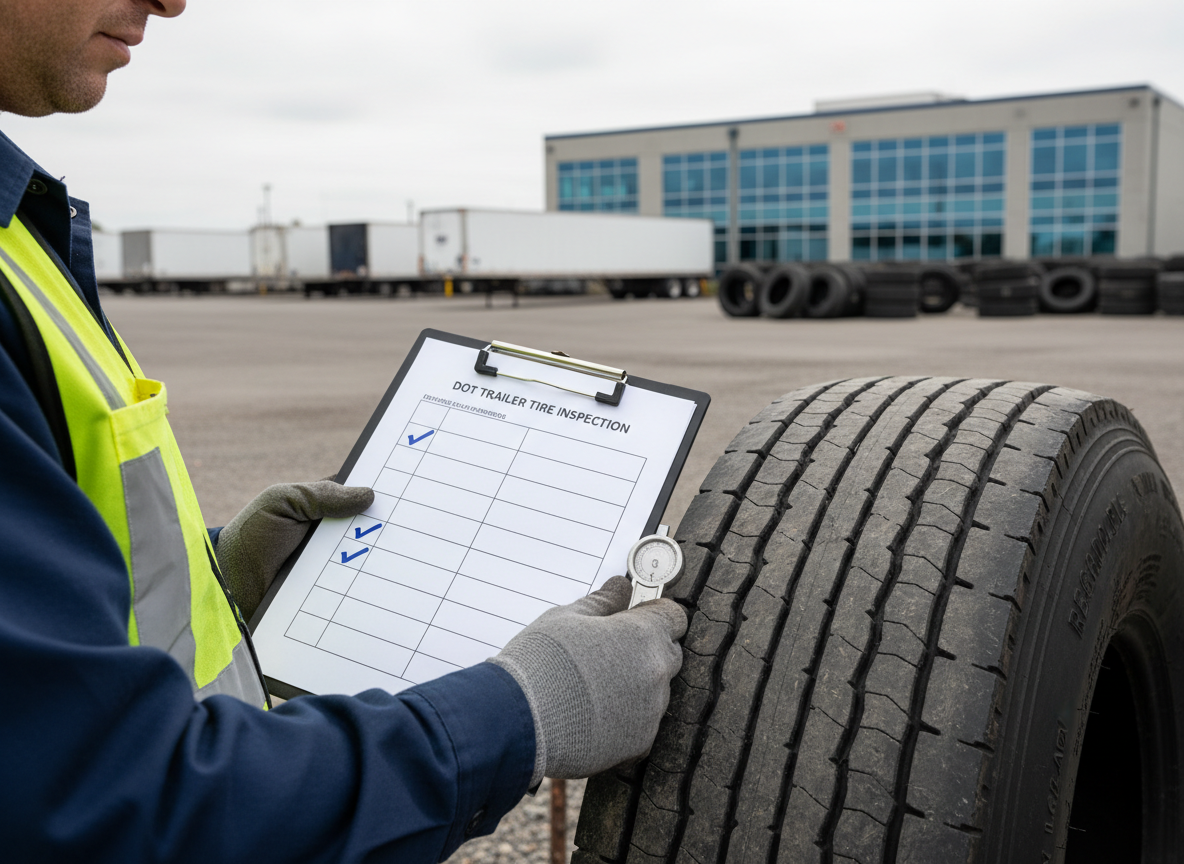
Regrooving is legal in Canada — but only when done right. For fleet managers, that means understanding the compliance gates, the documentation fleets must keep, and the safety protocols that protect both tires and casing value.
This guide covers what makes regrooving DOT/CSA-compliant, what disqualifies a tire, and what your proof pack should include for roadside inspections or insurance audits.
The Legal Foundation
Tire regrooving is explicitly permitted under DOT and CSA regulations for trailer axles (never steer or drive axles). The key requirement: the tire must be manufacturer-marked REGROOVABLE. That marking isn't optional — it's the legal gate. Without it, regrooving voids the tire's DOT compliance and creates liability.
Why Compliance Matters
A roadside inspection can flag a non-compliant tire and ground your trailer. An insurance claim can be denied if documentation is missing. A casing failure due to improper regrooving (belt damage, over-depth cut) can cost thousands. Compliance isn't bureaucracy — it's protection.
What this guide covers:
- The 5 eligibility gates (REGROOVABLE marking, straight-rib pattern, trailer axle only, no prior regrooving, no prior retreading)
- Depth control and the 3 mm safety limit
- Pre- and post-service documentation (what to photograph, what to measure, what to keep on file)
- The "proof pack" — your audit-ready bundle for inspectors or insurers
- Common compliance mistakes and how to avoid them
If you want the fundamentals first, read our guide on what tire regrooving is and how it works. For the ROI and cost savings case, see our fleet tire cost optimization guide.
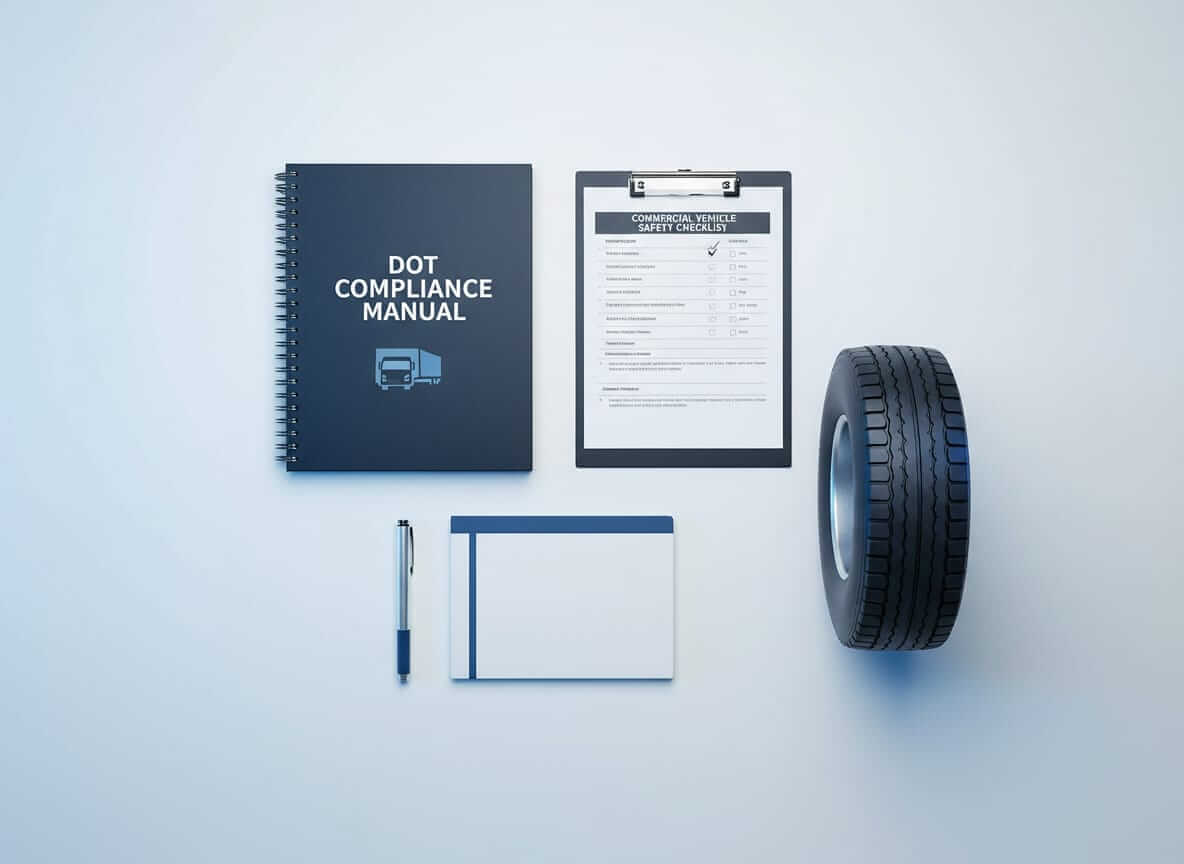
Documented regrooving provides proof of compliance for roadside inspections and insurance audits
The 5 Eligibility Gates (Non-Negotiable)
REGROOVABLE Marking
The tire sidewall must have this marking. If it's absent, the tire cannot legally be regrooved. No exceptions.
Straight-Rib Pattern Only
Lug or block patterns cannot be regrooved safely. Only straight-rib tires qualify.
Trailer Axles Only
Steer and drive axles are disqualified. Regrooving on these axles violates DOT rules and creates safety risks.
Never Previously Regrooved
A tire can only be regrooved once. Double-regrooving weakens the casing and voids compliance.
Never Previously Retreaded
This is the hardest rule to verify but the most critical. Retreading involves removing ~1–2 mm from the casing and applying a bonding layer. Regrooving after retreading risks cutting into that bonding layer, damaging the casing. If a tire has been retreaded, it cannot be regrooved.
Depth Control: The 3 mm Rule
Regrooving must never exceed 3 mm of cut depth. This mechanical limit protects steel belts from contact and prevents casing damage. Professional regrooving uses dual depth limiters per blade to ensure accuracy (±0.5 mm tolerance).
Documentation: Your Proof Pack
Keep these on file for every service:
- Pre-service inspection report — tire condition, REGROOVABLE marking confirmed, pattern verified, no visible damage
- Tread depth measurements — before and after (digital or paper, with date and technician signature)
- Before/after photos — sidewall showing REGROOVABLE marking, tread depth gauge readings, final grooves
- Service record — date, trailer ID, tire position, depth cut, technician name, customer signature
This proof pack is your defense in an audit or claim. Without it, you're exposed.
For a detailed documentation workflow, read our guide on DOT/CSA regrooving documentation and the proof pack.
Common Compliance Mistakes (Avoid These)
Top 5 Mistakes
- Skipping the REGROOVABLE check — assuming a tire qualifies without verifying the marking
- Regrooving drive/steer axles — happens when yard staff don't verify axle position
- No documentation — keeping no photos or depth logs
- Cutting too deep — exceeding 3 mm depth risks belt contact and casing damage
- Regrooving a retreaded tire — often discovered too late; always ask your tire supplier
The Right Approach
- Always verify REGROOVABLE marking on the sidewall before service
- Confirm trailer axle position — never steer or drive
- Keep a paper depth report for every service
- Use mechanical depth limiters — not software settings
- Ask: has this tire been retreaded? If unsure, don't regroove
The ROI of Compliance
Regrooving at $80/tire saves fleets $12,000–$35,000 every six months (depending on fleet size). But that ROI evaporates if a tire fails inspection or a casing is damaged due to non-compliance. Compliance isn't a cost — it's insurance.
Next Steps
- Verify your current tire inventory — Check sidewalls for REGROOVABLE markings. Separate eligible from ineligible tires.
- Establish a proof-pack process — Assign someone to photograph and document every service. Digital or paper — consistency matters.
- Train your yard staff — Ensure they know the 5 gates and can spot REGROOVABLE markings quickly.
- Schedule a pilot — Start with 2 trailers (8 tires). Full documentation, before/after photos, depth reports. This builds your proof pack and confidence.
For the full step-by-step on-site workflow, visit the How It Works page. To check eligibility and book a pilot, use the pre-qualification form.
Ready to see the savings? Book a 2-trailer pilot this week.
Call 438-345-2854 | Email: [email protected] | Visit www.apexoperationshub.ca
For a deeper compliance and safety breakdown, read our article on DOT & CSA compliance for trailer tire regrooving. For the eligibility checklist, see how to tell if a trailer tire is regroovable.