
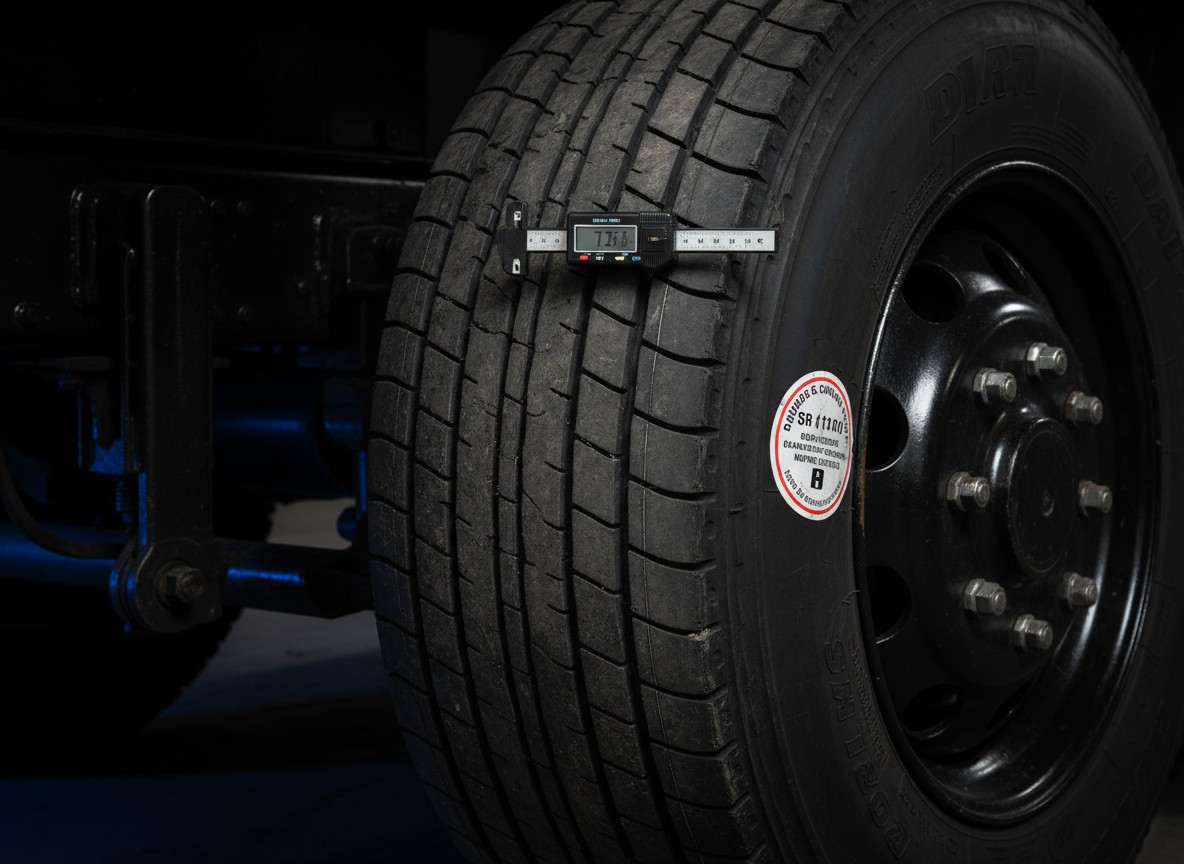
When fleet operators think about tire tread depth, one question dominates: Is this legal? The answer isn't always straightforward, and that's exactly why DOT and CSA regulations exist — to set a clear, measurable standard that protects both safety and compliance.
Tire regrooving has been legal in North America for decades, but it's surrounded by misconceptions. Some fleet managers believe it voids warranties. Others worry it compromises safety or violates DOT standards. The truth is simpler: when performed correctly — with mechanical depth limiters, pre-inspection, and documented proof — tire tread recovery is a DOT-compliant, CSA-approved method to extend tire life while maintaining full regulatory compliance.
At Apex Tread Recovery, we don't just cut grooves. We follow a compliance-first process that ensures every tire we service meets DOT and CSA standards before, during, and after the work. This post explains exactly how that works, what the regulations actually say, and why proper tread recovery protects your fleet's safety record and your bottom line.
Quick summary (fleet-friendly)
- Regrooving is legal when the tire is manufacturer-marked as REGROOVABLE and the groove is cut within the allowed rubber layer.
- Safety depends on depth control and inspection. The biggest risk is cutting too deep and exposing belts.
- Documentation matters. Before/after depth readings and a clear marking protocol help prove what was done.
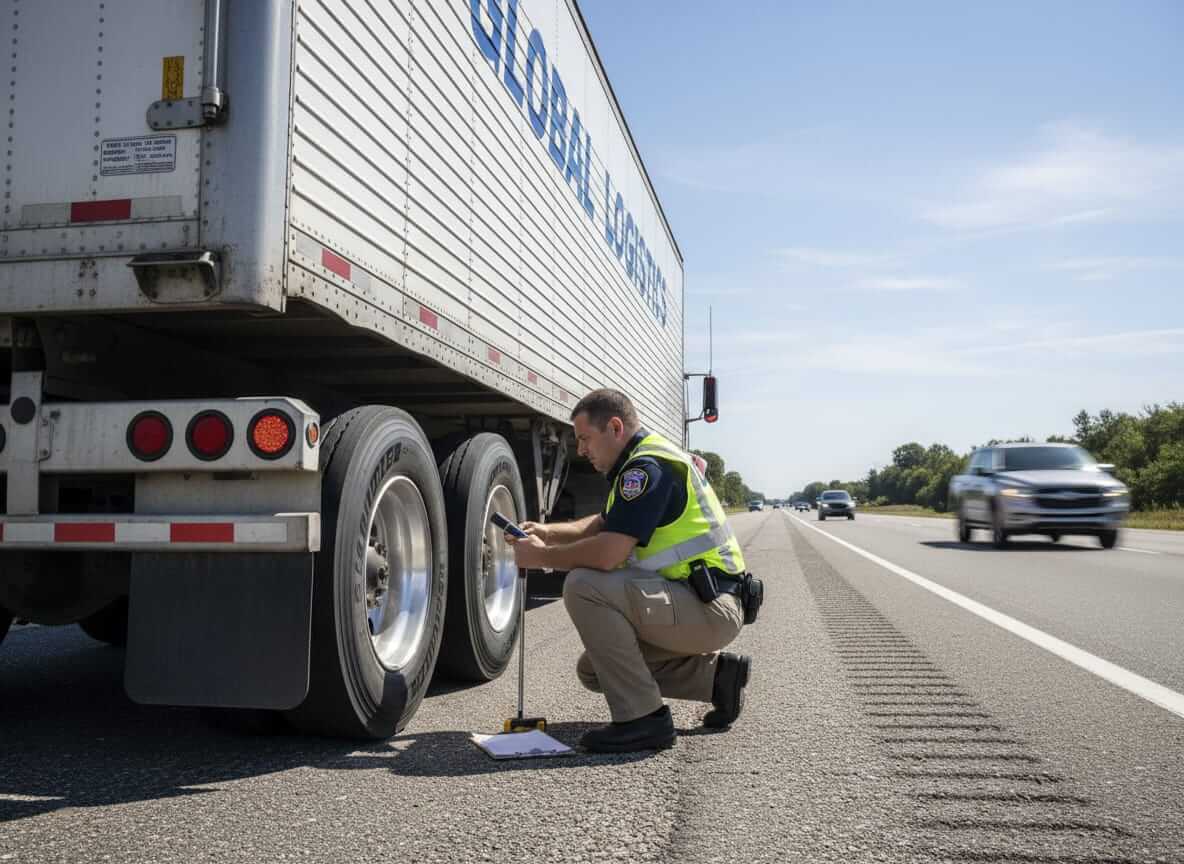
DOT roadside inspection — documented regrooving provides proof of compliance
1) What makes regrooving legal (and what makes it not)
The most important compliance point is simple: the tire must be designed and marked by the manufacturer as REGROOVABLE. That marking is your first gate. If the sidewall does not show a regroovable designation, the tire should not be regrooved.
From there, legality and safety come down to process control. Regrooving is not a freehand cut. The groove must be cut within the rubber layer intended for regrooving, following the original tread design. For Apex Tread Recovery, that means straight-rib trailer patterns only.
Compliant (what you want)
- Manufacturer-marked REGROOVABLE
- Pre-inspected casing and sidewall
- Depth-limited cut (mechanical control)
- Pattern-following grooves (straight ribs)
- Documented before/after depth readings
Non-compliant (red flags)
- No REGROOVABLE marking
- Previously regrooved tires
- Visible casing/sidewall/belt damage
- Uncontrolled depth (freehand)
- Mixed/block/siped patterns
2) The real safety issue: cutting too deep
Most safety anxiety around regrooving comes from one scenario: a cut that goes too deep and compromises the steel belts. That is exactly why depth control matters more than marketing.
A depth-limited process is designed to keep a protective rubber layer above the belts. On the Apex system, the maximum cut depth is mechanically limited, and we maintain a minimum 3 mm safety buffer above steel belts. This is not a preference — it is a hard stop.
3) Pre-inspection: the compliance gate fleets should insist on
A compliant regrooving program starts with rejecting the wrong tires. Your best protection is a strict pre-inspection gate. If a tire shows casing damage, sidewall issues, or anything questionable, it should be skipped and documented.
This is also where you protect your maintenance team. A clear policy — “We only service eligible, safe, manufacturer-marked regroovable trailer tires” — prevents pressure to push borderline casings through the process.
4) Documentation: what to keep on file
If you want regrooving to be a low-friction part of your tire program, keep proof. Documentation is not paperwork for its own sake — it is what turns a service into a controlled maintenance process.
Recommended compliance file (per yard visit)
- List of trailers serviced and tire count
- Pre-inspection notes (including rejects)
- Before/after tread depth readings (paper depth report)
- Photos (optional but useful for audits)
- Tire marking protocol (stamp) to prevent double-service
If you want a step-by-step view of the on-wheel workflow, see the How It Works. It outlines the inspection gate, the depth-limited cut, and the documentation you receive.
5) How to reduce inspection friction (practical talking points)
When an inspector or internal auditor asks about regrooving, you do not need a long debate. You need a short, repeatable explanation backed by a controlled process.
Simple compliance script
"These are manufacturer-marked REGROOVABLE trailer tires. We only regroove straight-rib patterns. Every tire is pre-inspected, the cut depth is mechanically limited, and we keep before/after depth readings and service documentation."
Where regrooving fits in a smart tire program
Regrooving is not competing with retreading. It is a step that helps you get full value from the casing before you retread or replace. For many fleets, the most efficient sequence is:
- Run the tire until it reaches the ideal regrooving window
- Regroove (depth-limited, documented)
- Continue service until end of usable life
- Retread (if casing remains healthy)
If you want the cost math and ROI tables, read our guide on fleet tire cost optimization and the ROI of regrooving.
Next step: validate on two trailers
The fastest way to build confidence is a 2-trailer pilot. You see the pre-inspection gate, the depth-limited cut, and the documentation on your own equipment — before you scale it across the yard.
To review eligibility rules and common objections, visit the FAQ page, or read our foundational guide on what tire regrooving is. When you are ready to schedule, use the contact form to book a pilot.
Book a 2-trailer pilot this week
$80/tire. On-wheel. In-yard. Documented results. We confirm eligibility during pre-inspection.
Book a 2-Trailer Pilot